Wednesday, July 24, 2013
Writing Single Title Romance (Or Sweet Romance is on the Rise)
Well, I've had to put my other blog into hiding. Sadly, the creepy people who like to troll the Internet can't seem to stay away. For the safety of my daughter, I'm keeping it private. As a matter of fact, I'm not sure I'll be blogging there again. Cheeky deserves her privacy. As much as I love to share my journey with those who are truly interested in adoption, I do NOT want to share it with voyeurs who think of her as some strange and exotic creature.
So, that is my story, and I am sticking to it.
I guess, though, that is part of life, right? Morphing into something different than what we once were? Taking steps into something new, developing that until it is time to step into something different?
I spent two and a half years focused on being the kind of mother Cheeky needed. I blogged about her and about us and about our family. At some point, though, she became completely us. Not at all seperate. Truly connected, her journey our journey. Yes, her past is always with us, but it is as much a part of our family story as the birth stories of our other children.
I suppose that there is a part of me that is tired of seperating Cheeky out, making her story somehow unique to us. She wants to feel the same as her siblings, and I want her to feel the same, and while we talk often about her life in China, her birth family, even a future where we might search for them, we are a family...complete without the use of words like adopted, biological, special need.
That is the way it should be.
And, so I am here, blogging about life in general. Everything from mothering, to faith, to being a wife and being a writer and washing the endless supply of dishes that are in the kitchen sink.
My life has changed drastically since the last time I posted here.
I was in a car accident that caused me chronic pain. I had moments where I thought that writing wasn't worth my time or effort. I almost gave up, tossed all the years of writing into a little drawer and left them there. But, I had contracts to fulfill, and I had to keep writing.
So, I did.
Write and write and write some more. In the deepest moments of depression and pain, I wrote.
It is very surreal when I think of it, now. I'm not sure how I did it. I prayed, but I wasn't even sure what to pray for. But, as Romans 8:26 says - In the same way, the Spirit helps us in our weakness. We do not know what we ought to pray for, but the Spirit himself intercedes for us through wordless groans
In the midst of all this, I kept shooting toward my goals, because it was that or open the drawer and shove the writing life in it.
One of my goals has been to write both series romance and single title romance. I've had that goal from the day I sold STILL WATERS. Which was, btw, a single title. My second book was one of the launch books for Love Inspired Suspense. I've been happily and consistently writing for them for eight years, but I have never given up the goal of writing single title romance again.
I thought long and hard about where I wanted to sell a single title romance. The Christian market or the mainstream market? I wanted to write sweet romance but not necessarily Christian romance. I had heard a speaker at a local writing conference say, "The world needs sweet stories."
I wanted to write sweet stories.
The market was filled with erotica, paranormal, dark subjects that I don't and can't write.
And, then the pendulum swung. Mainstream publishers began to see a trend toward sweet romance, and they rushed to fill a hole in the market. It just so happened that I had written a proposal for a mainstream Christmas story, and it just so happened that it was sitting on my agent's desk and on my editor's desk. I had been waiting for over six months and figured the story was dead in the water. At the time, I didn't care. I was still in the midst of pain and depression from the car accident, and it was all I could do to keep writing.
One day, my agent sent me a short email. She said that Kensington press was looking for a sweet romance. An editor there had contacted her and asked if she had one, and she immediately thought of my Christmas story. Did I want to submit it?
It was a door, and I've always believed that God opens them when the time is right.
I said yes.
Two days later, John Scognamiglio called my agent and offered me a three book contract for a small town romance series.
My first book comes out in November.
It is a sweet story about a woman who finds that the one place she's never wanted to be is the only place she really belongs. It is about family, community, connections that tie us together...even when we don't want them to.
In many ways, it is like Still Waters:
Filled with quirky characters, centered around small town life and the wonderful people who live it.
There is no overt faith message, but the characters...like us...are searching for meaning and purpose in their lives. They are real people, living in a real world, facing troubles the best way they can.
It is the kind of book I love to read, and it seemed only natural to write one.
Sweet romance is finally on the rise again, people, and I couldn't be more thrilled to be part of that!
Wednesday, August 03, 2011
Saturday, July 23, 2011
Friday, July 22, 2011
Finally, Four!
Just two more months and the fourth book in the Heroes for Hires series will be out. I'm excited. It's been 7 months since the third book hit the shelves. In total, 9 months will have passed by the time the fourth book is released.
You may wonder why I'm shoving those numbers out there. The fact is, to be successful as a series romance author, you've got to be prolific and keep your name circulating. That's the only way to grow a readership. Every month, 4 Love Inspired Romantic suspense books are released. Every month, readers have a choice about whose book to pick up off the shelf. All things being equal, readers are more likely to choose a name they are familiar with than one they are not.
So, I'm happy that book #4 will be out in September. Happier still that book #5 will be out in November and that book #6 will follow in April.
Hopefully, it won't be too long between those and the next three!
You may wonder why I'm shoving those numbers out there. The fact is, to be successful as a series romance author, you've got to be prolific and keep your name circulating. That's the only way to grow a readership. Every month, 4 Love Inspired Romantic suspense books are released. Every month, readers have a choice about whose book to pick up off the shelf. All things being equal, readers are more likely to choose a name they are familiar with than one they are not.
So, I'm happy that book #4 will be out in September. Happier still that book #5 will be out in November and that book #6 will follow in April.
Hopefully, it won't be too long between those and the next three!
Wednesday, July 20, 2011
Oh Those Covers
Well, it was bound to happen. I just didn't think it would happen twice in one day. Two reader contacted me to let me know that the heroine's hair on my June cover did not match the description in the book.
I wish I could say they were wrong.
Alas, Susannah's hair really isn't described as it is pictured.
I lay the blame squarely on the feet of confusion.
See, when I originally wrote the book, the heroine was to have long, blond curly hair. Since the book is a continuity and that was the description given in the continuity bible, I went with it. I wrote the entire book with a heroine whose long blond hair reminded the hero of summer and sunshine.
And, then I was sent the cover. Which, in case you haven't see it, looks like this:
I immediately changed the manuscript to reflect the cover. I was absolutely convinced the heroine's hair was brown. The copy editor felt it was red. I think we eventually came to a compromise, but apparently not as good of one as we might have. Both the readers who contacted me want to know what color her hair really is. Let's call it auburn, shall we? And be content with that.
Happy writing!
I wish I could say they were wrong.
Alas, Susannah's hair really isn't described as it is pictured.
I lay the blame squarely on the feet of confusion.
See, when I originally wrote the book, the heroine was to have long, blond curly hair. Since the book is a continuity and that was the description given in the continuity bible, I went with it. I wrote the entire book with a heroine whose long blond hair reminded the hero of summer and sunshine.
And, then I was sent the cover. Which, in case you haven't see it, looks like this:
I immediately changed the manuscript to reflect the cover. I was absolutely convinced the heroine's hair was brown. The copy editor felt it was red. I think we eventually came to a compromise, but apparently not as good of one as we might have. Both the readers who contacted me want to know what color her hair really is. Let's call it auburn, shall we? And be content with that.
Happy writing!
Saturday, February 05, 2011
Where to Find Shirlee
If you happen upon this blog while looking for writing advice or information about my books, you may be wondering where I've gone. I'm still blogging, I'm just not doing it here! I've combined my family blog with my writing blog, because I can't keep up with both.
Well, I could. If I didn't care about keeping up with my writing schedule!
You're welcome to follow along on my journey through the writing world and life here: http://shirlee-mccoy.blogspot.com/. I love to answer writing related questions. Feel free to email me at shirlee@shirleemccoy.com.
Well, I could. If I didn't care about keeping up with my writing schedule!
You're welcome to follow along on my journey through the writing world and life here: http://shirlee-mccoy.blogspot.com/. I love to answer writing related questions. Feel free to email me at shirlee@shirleemccoy.com.
Tuesday, August 17, 2010
Did You Think It Was Going To Get Easier?
So, here's what happened.
On Saturday, I dragged my butt out of bed at six so that I could be at THE MEETING by seven so that I could step on the SCALE and be found acceptable or NOT based on whatever number the scale spewed out.
So, I stepped on the scale. It spewed out a number. Thecult WW leader said, "Wonderful! You had another good week."
And, I said, "No. I didn't. It was a hard week.Every week, I come here, and I think...next week will get easier. But it never does."
And this woman, this trained enthusiast, this constant source of inspiration and never-ceasing you-can-do-it attitude said, "Did you really think it would get easier?"
I looked at her with what must have been absolute horror, and I said, "Yeah. I guess I did, but I guess it doesn't."
And we both laughed, but I wasn't laughing inside.
Because I WANT it to be easier.
Seriously, Saturday was my 25th Weight Watcher's meeting, and I have lost over 46 pounds. Shouldn't it be easier?
Probably, if you came here to read about writing, you're wondering where I'm heading with this.
Well, friends, here is the deal. I've written eighteen books for Harlequin. Eighteen books. Now, I've launched myself into book nineteen, and I'm thinking, as I plod through one page after another, shouldn't this be getting easier?
I mean, in some ways it is. I understand the flow and feel of a story much better than I did when I began. I get it. I know how to create a story out of an idea, how to create likable (usually) characters, how to write chapter one, the end and everything in between.
Yep. That has gotten easier.
The other stuff has not.
I still struggle to balance my two very diverse roles. On the one hand, I am the traditional stay-at-home mom. I've added a twist to that by homeschooling my clan, but, in all other respects, I am the woman who cooks and cleans (sometimes) and does the laundry (usually) and scrubs toilets (yuck) and bakes cookies.
On the other hand, I am Shirlee the author. I have deadlines and copy edits and AAs and art fact sheets. I go to conferences and I try to connect with other writers. In the past couple of months, I've talked about the writing process at an elementary school, talked about achieving life goals at any age at a senior luncheon and talked about fulfilling dreams at a community college GED class. I love what I do, and I am passionate about it.
But it has not gotten easier, this balancing act. It is not a simple thing to stay on track with writing and while maintaining quality time with kids and husband and friends.
Maybe that is what it is all about, though. Not the destination, but the journey.
And this is my journey. Tough as it may sometimes be. Challenging as I might sometimes find it.
Does it get easier once you're published?
In some ways, yes. In others:
Did you really think it would?
On Saturday, I dragged my butt out of bed at six so that I could be at THE MEETING by seven so that I could step on the SCALE and be found acceptable or NOT based on whatever number the scale spewed out.
So, I stepped on the scale. It spewed out a number. The
And, I said, "No. I didn't. It was a hard week.Every week, I come here, and I think...next week will get easier. But it never does."
And this woman, this trained enthusiast, this constant source of inspiration and never-ceasing you-can-do-it attitude said, "Did you really think it would get easier?"
I looked at her with what must have been absolute horror, and I said, "Yeah. I guess I did, but I guess it doesn't."
And we both laughed, but I wasn't laughing inside.
Because I WANT it to be easier.
Seriously, Saturday was my 25th Weight Watcher's meeting, and I have lost over 46 pounds. Shouldn't it be easier?
Probably, if you came here to read about writing, you're wondering where I'm heading with this.
Well, friends, here is the deal. I've written eighteen books for Harlequin. Eighteen books. Now, I've launched myself into book nineteen, and I'm thinking, as I plod through one page after another, shouldn't this be getting easier?
I mean, in some ways it is. I understand the flow and feel of a story much better than I did when I began. I get it. I know how to create a story out of an idea, how to create likable (usually) characters, how to write chapter one, the end and everything in between.
Yep. That has gotten easier.
The other stuff has not.
I still struggle to balance my two very diverse roles. On the one hand, I am the traditional stay-at-home mom. I've added a twist to that by homeschooling my clan, but, in all other respects, I am the woman who cooks and cleans (sometimes) and does the laundry (usually) and scrubs toilets (yuck) and bakes cookies.
On the other hand, I am Shirlee the author. I have deadlines and copy edits and AAs and art fact sheets. I go to conferences and I try to connect with other writers. In the past couple of months, I've talked about the writing process at an elementary school, talked about achieving life goals at any age at a senior luncheon and talked about fulfilling dreams at a community college GED class. I love what I do, and I am passionate about it.
But it has not gotten easier, this balancing act. It is not a simple thing to stay on track with writing and while maintaining quality time with kids and husband and friends.
Maybe that is what it is all about, though. Not the destination, but the journey.
And this is my journey. Tough as it may sometimes be. Challenging as I might sometimes find it.
Does it get easier once you're published?
In some ways, yes. In others:
Did you really think it would?
Tuesday, August 10, 2010
In, Out, and In Again (or...So, You Think You Want A Writing Career)
I've decided that there is a difference between being a writer and having a writing career.
When I am just being a writer, I write stuff like this, or this. I write because the words are there and because I can and because it's fun or cathartic.
When I am working as a career author, I write because I must. That is not to say that I don't want to, but simply that sometimes I must force myself to. Words don't always flow freely when a writer must write. Sometimes, pulling words into sentences and sentences into paragraphs and paragraphs into chapters is as painful as pulling a tooth that isn't loose.
The thing is, if a person wants to have a career as a writer, she must learn the art of beginning, following through and ending.
That seems so basic and simple, but it is not. It is very easy to begin something. Ideas (at least for me) come like sunshine in the desert. Words, though, words must be crafted into scenes that transcend page and ink. Once the idea is born, it must be babied and coddled and raised into a fully developed story.
And, then, it must be patted on the head and sent out into the great wide world.
In comes the idea.
Out it goes.
In comes the next (yep, that's my new contract!)
Out it goes.
Over and over and over again.
And that means writing and writing and writing, people. Whether we're in the mood or not. Whether the kids are grumpy or not. Whether there are piano recitals and ballet shows and homeschool field trips and cat vomit on the floor or not.
We must write.
Because we want to. Because we can. Because we're being paid to.
A career means a job. No matter how much of an art writing is (and, believe me, it is), if we want to have careers we must work every day.
In with the idea.
Out with the words.
In with the next idea.
Out with the words.
That's the way it works, if we want to have careers as writers.
When I am just being a writer, I write stuff like this, or this. I write because the words are there and because I can and because it's fun or cathartic.
When I am working as a career author, I write because I must. That is not to say that I don't want to, but simply that sometimes I must force myself to. Words don't always flow freely when a writer must write. Sometimes, pulling words into sentences and sentences into paragraphs and paragraphs into chapters is as painful as pulling a tooth that isn't loose.
The thing is, if a person wants to have a career as a writer, she must learn the art of beginning, following through and ending.
That seems so basic and simple, but it is not. It is very easy to begin something. Ideas (at least for me) come like sunshine in the desert. Words, though, words must be crafted into scenes that transcend page and ink. Once the idea is born, it must be babied and coddled and raised into a fully developed story.
And, then, it must be patted on the head and sent out into the great wide world.
In comes the idea.
Out it goes.
In comes the next (yep, that's my new contract!)
Out it goes.
Over and over and over again.
And that means writing and writing and writing, people. Whether we're in the mood or not. Whether the kids are grumpy or not. Whether there are piano recitals and ballet shows and homeschool field trips and cat vomit on the floor or not.
We must write.
Because we want to. Because we can. Because we're being paid to.
A career means a job. No matter how much of an art writing is (and, believe me, it is), if we want to have careers we must work every day.
In with the idea.
Out with the words.
In with the next idea.
Out with the words.
That's the way it works, if we want to have careers as writers.
Monday, August 09, 2010
It Is Possible
To rewrite a book five times before you send it in and survive.
Just thought I'd share that tidbit of information.
Monday, August 02, 2010
Wherein, I Eat My Words
I have made it known that I do not think a Love Inspired author needs an agent. I have said (and I quote), you don't need to have an agent to sell to Love Inspired. I have said that if an author can sell herself, she doesn't need to worry about such people as agents.
Today, I am eating my words.
The plate is piled high, and I am chowing down.
Because, I have decided that, while it is true a writer does not need an agent to sell to Love Inspired, having an agent is a good thing. Nay, a great thing (like the way I used 'nay'???).
Perhaps you think I'm saying this because of my new contract, and that may be partially true. The fact is, I don't think I would have been offered a six book deal if not for Melissa Jeglenski. So, while I do believe I would have sold the proposal, having an agent did up the number of books I was offered. That is not, however, why I think an agent is a good thing.
So, let me explain my change of heart.
As many of you know, I had an agent (many eons ago). I signed with him after I'd sold four books to Steeple Hill. He had (and has) a great reputation. He sold (and still sells) many projects to many publishers. He had (and maintains) a diverse and impressive client base. He was (and is) the dream agent of many a Christian writer.
But things didn't work out. I was writing lots, and I was burned out and things just....well, they just happened. Not his fault. Not mine. Just a series of misunderstandings and lack of communications that led me to say goodbye.
Goodbye to him and to agents in general.
I did not, after all, need an agent. I was selling and selling and selling. So...what was the point?
I learned the point at RWA this past week.
It is true that I signed with Melissa Jeglenski weeks ago and that she negotiated a wonderful new contract for me, but until I sat across from her and watched her listen to me, I still thought I could do this thing on my own. This thing being building a career and a reputation and all the stuff that come with being published.
So, Melissa and I sat down, and she asked me a few questions about goals and such, and she listened to the answers. That's when I realized that a good agent, like a good friend, provides a sounding board. She listens and she gives feedback. A good agent knows the market, he knows his client's strengths, and he is able to exploit both to the benefit of the author. A good agent manages to appear both hands-on (as in....what are you working on? what is your time frame for that? what are your goals?) and hands-off (as in....You don't feel you need me to read every contracted project before it's mailed in? That's fine. Just email me when you send it to your editor.). A good agent knows the market and the publishing houses better than the author ever can, because that is her business, AND a good agent exudes confidence. He has answers to the questions you ask, and if he doesn't, he knows where to find them. Not only that, but he acts like it is exciting to answer your questions even if, like me, you ask way too many of them. In other words, a good agent does a great job of making you feel as if you are her only client. Not only does she make you feel that way, but she treats you that way. This individual approach is what, I am convinced, builds a career.
That is why, when it comes to having an agent, I am beginning to see that a good agent is much better than no agent. While I still maintain that a bad agent is worse than no agent.
What does that mean for you?
Research agents like you'd research a writing project or a publishing house. Look for a good fit. Find someone who loves the genre you write, someone who has a loyal client base and who has a good reputation.
Oh, and make sure she likes to eat dessert, because discussing business over salad in not nearly as fun as discussing it over this:
Today, I am eating my words.
The plate is piled high, and I am chowing down.
Because, I have decided that, while it is true a writer does not need an agent to sell to Love Inspired, having an agent is a good thing. Nay, a great thing (like the way I used 'nay'???).
Perhaps you think I'm saying this because of my new contract, and that may be partially true. The fact is, I don't think I would have been offered a six book deal if not for Melissa Jeglenski. So, while I do believe I would have sold the proposal, having an agent did up the number of books I was offered. That is not, however, why I think an agent is a good thing.
So, let me explain my change of heart.
As many of you know, I had an agent (many eons ago). I signed with him after I'd sold four books to Steeple Hill. He had (and has) a great reputation. He sold (and still sells) many projects to many publishers. He had (and maintains) a diverse and impressive client base. He was (and is) the dream agent of many a Christian writer.
But things didn't work out. I was writing lots, and I was burned out and things just....well, they just happened. Not his fault. Not mine. Just a series of misunderstandings and lack of communications that led me to say goodbye.
Goodbye to him and to agents in general.
I did not, after all, need an agent. I was selling and selling and selling. So...what was the point?
I learned the point at RWA this past week.
It is true that I signed with Melissa Jeglenski weeks ago and that she negotiated a wonderful new contract for me, but until I sat across from her and watched her listen to me, I still thought I could do this thing on my own. This thing being building a career and a reputation and all the stuff that come with being published.
So, Melissa and I sat down, and she asked me a few questions about goals and such, and she listened to the answers. That's when I realized that a good agent, like a good friend, provides a sounding board. She listens and she gives feedback. A good agent knows the market, he knows his client's strengths, and he is able to exploit both to the benefit of the author. A good agent manages to appear both hands-on (as in....what are you working on? what is your time frame for that? what are your goals?) and hands-off (as in....You don't feel you need me to read every contracted project before it's mailed in? That's fine. Just email me when you send it to your editor.). A good agent knows the market and the publishing houses better than the author ever can, because that is her business, AND a good agent exudes confidence. He has answers to the questions you ask, and if he doesn't, he knows where to find them. Not only that, but he acts like it is exciting to answer your questions even if, like me, you ask way too many of them. In other words, a good agent does a great job of making you feel as if you are her only client. Not only does she make you feel that way, but she treats you that way. This individual approach is what, I am convinced, builds a career.
That is why, when it comes to having an agent, I am beginning to see that a good agent is much better than no agent. While I still maintain that a bad agent is worse than no agent.
What does that mean for you?
Research agents like you'd research a writing project or a publishing house. Look for a good fit. Find someone who loves the genre you write, someone who has a loyal client base and who has a good reputation.
Oh, and make sure she likes to eat dessert, because discussing business over salad in not nearly as fun as discussing it over this:
And, yes, it was absolutely as yummy as it looked!!!!
Monday, July 26, 2010
Less than 24 hours....
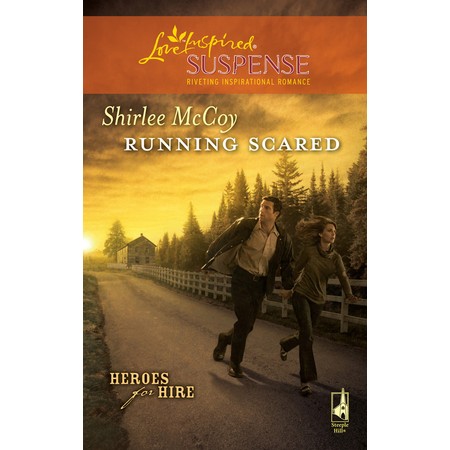
And I'll be on my way to Orlando. That's where this year's RWA conference is being held. I'm signing RUNNING SCARED at the Harlequin book signing Friday morning and returning home on Saturday.
I'm excited and nervous just like I always am before a trip.
See you when I get back!
I'm excited and nervous just like I always am before a trip.
See you when I get back!
Monday, July 19, 2010
Six
Six is my favorite number today.
Because my publishing house just offered me a six book contract.
SIX.
Five weeks ago, I proposed a four book contract to Harlequin. I was hoping to increase from the three book contracts I'd been offered before. I was blown away when my agent called today and said that Harlequin is going to contract me for more than that.
I have worked so hard to establish myself as an author, and I have struggled to balance my passion for that with my passion for my family. I feel so blessed to be able to do what I love.
As I celebrate with my children, I hope that they will see that a person can pursue her dreams without comprising her faith or her family time.
Speaking of celebrating....what in the world should I do to mark this occasion???
Because my publishing house just offered me a six book contract.
SIX.
Five weeks ago, I proposed a four book contract to Harlequin. I was hoping to increase from the three book contracts I'd been offered before. I was blown away when my agent called today and said that Harlequin is going to contract me for more than that.
I have worked so hard to establish myself as an author, and I have struggled to balance my passion for that with my passion for my family. I feel so blessed to be able to do what I love.
As I celebrate with my children, I hope that they will see that a person can pursue her dreams without comprising her faith or her family time.
Speaking of celebrating....what in the world should I do to mark this occasion???
Free
If you like free things, you may like this. It's the online read I mentioned a few weeks ago. It's a complete romantic suspense story. It's a prequel to RUNNING SCARED.

The chapters are posted here.
The discussion is here.
And you can find the inspiration for the hero's name here. I love this little boy. He's just a baby, really, but he truly inspires me to reach higher, work harder and be better. That, in my opinion, is what a true hero does!

The chapters are posted here.
The discussion is here.
And you can find the inspiration for the hero's name here. I love this little boy. He's just a baby, really, but he truly inspires me to reach higher, work harder and be better. That, in my opinion, is what a true hero does!
Thursday, May 20, 2010
Thursday, May 13, 2010
What it Takes to Be an Author, Part II
Guts.
Pure and simple.
You can't be an author if you're not willing to face your fears. Fear of failure. Fear of rejection. Fear of letting others down.
Fear that the answer to the following questions is 'No!':
Will I ever write another book?
Will I ever write another GOOD book?
Can I really do this again and again and again?
Those three questions have haunted me since day one of this journey.
I love to write.
I hate to fail.
To write, I must be willing to fail and to learn from it.
That's the difficult thing. That is the struggle. I must not only allow myself to fall from the high of, "I've completed it!" to the low of, "It stinks worse than rotten eggs", but I must also be willing and able and even compelled to pick myself up, brush myself off and fix whatever is broken (in me and my manuscript).
It's a gigantuine task. One that takes a will of steal and a whole lot of coconut cake (please see previous post for details).
Writing, you see, is not about one victory. It is not one defining moment. We often discuss The Call as if that were the end of the journey, but it is truly only the beginning. The Call is simply an opportunity. It is an editor saying, "I believe in you," and us responding, "I believe in what I'm doing."
Because without that belief, we will publish one or two or three books, and the journey will get more difficult as we try to balance family life and writing and editing and creativity. We will feel overwhelmed and wonder if it is worth it, and we will begin to doubt what we are doing. If we are not careful, we will lose our passion to our panic and self-doubts. Sadly, I have seen this happen. I know several people who have published one book and never published another. Or published two or three or four and then thrown in the towel and said, "enough!".
So, yeah, The Call is the defining moment, but it is not THE moment. That does not exist. To be an author every moment must be THE moment. Each time we sit down to write, we must force aside our anxiety and worries and endless questions, and we must pour ourselves into the book with nary a thought of rejection and failure.
And that's a hard thing to do.
What does it take to be an author? It takes guts. Lots of guts.
And, of course, friends.
And faith.
And the belief that what we're doing is exactly what we were made for.
Monday, May 03, 2010
What it Takes to Be An Author, Part I
Seriously, I know it seems like being an author should be all about writing the book. Creativity, inspiration, passion, those are the things I expected to bring to the party (so to speak) when I began my journey to publication.
And I have.
But there is a lot more to writing than....well....writing.
Take for example, the copy edit stage.
Once you've written "The End", sent your baby off and had your story accepted by an editor, you can't just wipe your hands of the matter.
Really. You can't.
A few weeks or months after acceptance (depending on how far you are from publication date), your 300 or so pages of writing will be sent to a copy editor. It is the copy editor's thankless job to check the details of your story. Does John Doe have a different name on page 21 than he did on page 10? If so, the copy editor will notice it. Things she notices or has questions about are jotted down for future reference. Meanwhile, your editor is hard at work making her own notes.
When they are finished, you will open your front door and find this on your stoop -

Generally speaking, the big red sticker means that what is inside is extremely urgent and time sensitive. Take my advice and do not set the package on the counter to be opened at a later date. Otherwise, receiving a manuscript just days before it is due back to your editor might pose a problem. Case in point, the cover letter from my most recent copy edits. I received them on the 29th and they needed to be back on my editor's desk on the 5th.

Once you gird your loins and open the package, you'll find your entire manuscript marked and ready for your critical eye. During this stage, it is not the editor's job to make you feel good. There may be smiley faces and hearts sprinkled in the margins of your masterpiece, but you will also have comments like, "Please don't have them kiss when she's got strep throat," jotted down in the white spaces. Such comments will, of course, make you cringe, and it at this point you must hike up your big-girl britches and face your nemesis head-on (and by nemesis I mean your embarrassment, defensiveness, self-doubt, etc....NOT your editor's comments.)
In order to tackle your copy edits effectively, you may want to read through the comments and get an idea of what may need to be fixed.

After that, you will spend an inordinate amount of time searching for the perfect red pen. Okay. Maybe you won't do that, but in my house, with five kids constantly borrowing my pens, that's how I begin.

Now, this is the time when things get tough. It is your job to answers the queries presented by your editor. You may feel that what you wrote was fine, and you may STET the recommended changes. You may realize that the editor's keen eye has once again caught you in less than stellar writing form. Either way, you must employ full use of your red pen, cutting and hacking and recreating so that your vision for the book and your editor's align.

The process is labor intensive. The beauty of a manuscript is in the details, after all. Slowly, slowly, you will work your way through the pages, reading comments, reworking sections. You'll get a crick in your neck and a massive headache, and you'll be reduced to breaking your diet and eating this:

Which will give you enough of a sugar rush to get you through the remaining pages. That's when you will realize that your house is silent, and that it's the wee hours of the morning and that every sane person is asleep.

But who said you were sane?
You are a writer, right? And writers, must do what they must to get their books to production. So, you'll print new pages of manuscript and attach them to old pages
At least, you will try to.
If your house is like mine (and it probably isn't, because my house is NUTS!), you'll spend too much time searching for paperclips and finding them like this:

By this time, the house will no longer be quiet, and you will enlist help in finding paperclips.

And finally, you will be done.
At this point, no matter how bad the weather, you will hop in your car and you will take your manuscript off to be overnighted (if, like me, you had only a few days to return it) into your editor's waiting hands.


Because that is what an author does if she is truly an author.
And I have.
But there is a lot more to writing than....well....writing.
Take for example, the copy edit stage.
Once you've written "The End", sent your baby off and had your story accepted by an editor, you can't just wipe your hands of the matter.
Really. You can't.
A few weeks or months after acceptance (depending on how far you are from publication date), your 300 or so pages of writing will be sent to a copy editor. It is the copy editor's thankless job to check the details of your story. Does John Doe have a different name on page 21 than he did on page 10? If so, the copy editor will notice it. Things she notices or has questions about are jotted down for future reference. Meanwhile, your editor is hard at work making her own notes.
When they are finished, you will open your front door and find this on your stoop -
Generally speaking, the big red sticker means that what is inside is extremely urgent and time sensitive. Take my advice and do not set the package on the counter to be opened at a later date. Otherwise, receiving a manuscript just days before it is due back to your editor might pose a problem. Case in point, the cover letter from my most recent copy edits. I received them on the 29th and they needed to be back on my editor's desk on the 5th.
Once you gird your loins and open the package, you'll find your entire manuscript marked and ready for your critical eye. During this stage, it is not the editor's job to make you feel good. There may be smiley faces and hearts sprinkled in the margins of your masterpiece, but you will also have comments like, "Please don't have them kiss when she's got strep throat," jotted down in the white spaces. Such comments will, of course, make you cringe, and it at this point you must hike up your big-girl britches and face your nemesis head-on (and by nemesis I mean your embarrassment, defensiveness, self-doubt, etc....NOT your editor's comments.)
In order to tackle your copy edits effectively, you may want to read through the comments and get an idea of what may need to be fixed.
After that, you will spend an inordinate amount of time searching for the perfect red pen. Okay. Maybe you won't do that, but in my house, with five kids constantly borrowing my pens, that's how I begin.
Now, this is the time when things get tough. It is your job to answers the queries presented by your editor. You may feel that what you wrote was fine, and you may STET the recommended changes. You may realize that the editor's keen eye has once again caught you in less than stellar writing form. Either way, you must employ full use of your red pen, cutting and hacking and recreating so that your vision for the book and your editor's align.
The process is labor intensive. The beauty of a manuscript is in the details, after all. Slowly, slowly, you will work your way through the pages, reading comments, reworking sections. You'll get a crick in your neck and a massive headache, and you'll be reduced to breaking your diet and eating this:
Which will give you enough of a sugar rush to get you through the remaining pages. That's when you will realize that your house is silent, and that it's the wee hours of the morning and that every sane person is asleep.
But who said you were sane?
You are a writer, right? And writers, must do what they must to get their books to production. So, you'll print new pages of manuscript and attach them to old pages
At least, you will try to.
If your house is like mine (and it probably isn't, because my house is NUTS!), you'll spend too much time searching for paperclips and finding them like this:
By this time, the house will no longer be quiet, and you will enlist help in finding paperclips.
And finally, you will be done.
At this point, no matter how bad the weather, you will hop in your car and you will take your manuscript off to be overnighted (if, like me, you had only a few days to return it) into your editor's waiting hands.
Because that is what an author does if she is truly an author.
Tuesday, April 27, 2010
True to Life
Deep characterization comes from true to life characters. I was reading contest entries and one of the things I noticed in several was that the characters were overdone. In my mind, that means they were caricatures rather than true-to-life people. When you're working, remember this - the characters you create must be real enough to become your reader's friends (or enemies).
What is real?
I suppose that depends on the character type. What one character says or does is not necessarily what another will say or do. The same is true of life, of course. Different people act different ways in the same situation. As you're writing, continually ask yourself if your characters' actions make sense.
Another interesting aside about the entries is that three of the seven entries I read involved people who were either a product of foster care or adoption. I won't speak to any specifics because that isn't my place or my right. Suffice to say, we must delve deeply when we write rather than simply accessing surface feelings or the most recognizable of emotions. All of life is about balance and dichotomy. As writers, we must capture both to truly capture the essence of humanity.
Anyway, here is a piece of real life that has been in my mind as I craft the story I'm working on. When I think about the heroine I'm writing, these are the emotions and feelings I am trying to sink deep into her fictional psyche. No matter how hard I try, though, I can never quite convey the depth of feeling I want to. On the one had, she must feel them deeply. On the other, she must be strong enough to internalize rather than over dramatize them. It is a difficult balance in life, and must also be a difficult one in fiction.
There is a picture on my computer. In it, a man holds two little girls. His head is bowed, his right hand lifted toward the sky, his left arm wrapped firmly around his charges. The girls are squirming bundles of energy. A matched pair, they look to be identical twins. The photo can’t hide their anxiety nor can it hide the man’s gaunt cheeks and thin frame. The picture was snapped by an adoptive mother visiting an orphanage in Ethiopia, and it showcases a moment that not many adoptive parents will ever get to see. It is the last hug, the last prayer, the last goodbye.

I cannot look at the photo without crying.
These are my nieces. This is their biological father. This moment is the last they will share together.
My sister received the photo via email and forwarded it to me. I called her, and we talked about the image. The conversation will probably be lost to time, but the feelings we shared, the mixture of joy and sorrow, it will live in both of our hearts forever.
In the wake of that conversation, I find myself thinking about my daughter’s birth family more than I ever have before. I have heard it said that we should not romanticize our children’s birth parents. I have heard it said that we should not tell our children that they were given up because of love, and I have found myself persuaded by this argument – if you tell your daughter that her birth mother loved her enough to give her up, you will make her question the security of her life with you.
I see the logic of that. I understand the reasoning. I even buy into it to an extent.
But I cannot buy into it fully.
And that, I guess, is my problem.
One day, I think Cheeky will ask – Mom, why was I abandoned? How did I become the girl in this picture:

What will I tell her? That her birth family could not care for her? That they may have already had a child and could not afford to have another? That laws that limit family size might have forced her birth mother’s hand?
Any of those reasons may be true. All of them may be the truth. Maybe none of them are.
I don’t know. I will never know.
But I do know this: Sometimes love means holding on and sometimes it means letting go.

My husband and I were talking about our new nieces. He was surprised to learn that their biological father was still living. “How can someone do that?” He asked. “How can someone say goodbye to children he has raised and loved for three years.”
I’ve been thinking about that a lot since that photo arrived in my in-box, thinking about the birth father’s gaunt cheeks and thin frame, his hand reaching toward Heaven.

What if I had no money, no food, no house?
What if keeping my children meant that they would never get an education, never go to college, never get married? Worse, what if keeping them meant their stomachs would never be full? What if keeping them meant watching them slowly fade away?
What if giving them up was the kindest most selfless thing I could do?
Would that mean I loved them less? Or would it mean I loved them more?
Sometimes in a quest for honesty and authenticity in telling our children’s stories, we feel compelled to state the facts and nothing more. Perhaps that is the way it should be.
Perhaps.
But there is a photo on my computer. My nieces and their birth father in the last moments they will share together. In Birth Father’s face I see sadness and anxiety, desperation and hope.
And, in my mind’s eye, an image plays over and over again – a dark-haired mother setting her pale child in a box and walking away. I think if I could have seen her face, that woman who walked into a crowded train station with a baby and walked out without one, I would have seen sadness and relief and hope and more desperation than I ever want to feel.
It is true that I do not have all the facts, but it is also true that my daughter’s story is about more than facts. It is about being abandoned and it is about being found. It is about miracles both big and small. It is about sacrifice and about sorrow. It is about all of those things.
And, yes, it is also about love.
My love.
Foster Mom’s love.
Even Birth Mom’s love.
When she asks, and I know she will, this is what I will tell my daughter – I can’t know for sure why your birth mother couldn’t parent you, but I do know this - sometimes it takes more strength and more love to let go than it does to hang on.
I wrote the above piece as a reflection of my own thoughts concerning my daughter's birth family. As always, though, what I experience in life finds its way into my books. I've written several characters who were adopted or in foster care, and I've written one book about a heroine who gave her daughter up for adoption (EVEN IN THE DARKNESS, in case you're wondering). Now, I'm working on another. My experiences this last year lend themselves to writing a more defined heroine than in DARKNESS, but I'm not sure I can do her justice.
I'll keep trying, though. That's what we writers do......
What is real?
I suppose that depends on the character type. What one character says or does is not necessarily what another will say or do. The same is true of life, of course. Different people act different ways in the same situation. As you're writing, continually ask yourself if your characters' actions make sense.
Another interesting aside about the entries is that three of the seven entries I read involved people who were either a product of foster care or adoption. I won't speak to any specifics because that isn't my place or my right. Suffice to say, we must delve deeply when we write rather than simply accessing surface feelings or the most recognizable of emotions. All of life is about balance and dichotomy. As writers, we must capture both to truly capture the essence of humanity.
Anyway, here is a piece of real life that has been in my mind as I craft the story I'm working on. When I think about the heroine I'm writing, these are the emotions and feelings I am trying to sink deep into her fictional psyche. No matter how hard I try, though, I can never quite convey the depth of feeling I want to. On the one had, she must feel them deeply. On the other, she must be strong enough to internalize rather than over dramatize them. It is a difficult balance in life, and must also be a difficult one in fiction.
There is a picture on my computer. In it, a man holds two little girls. His head is bowed, his right hand lifted toward the sky, his left arm wrapped firmly around his charges. The girls are squirming bundles of energy. A matched pair, they look to be identical twins. The photo can’t hide their anxiety nor can it hide the man’s gaunt cheeks and thin frame. The picture was snapped by an adoptive mother visiting an orphanage in Ethiopia, and it showcases a moment that not many adoptive parents will ever get to see. It is the last hug, the last prayer, the last goodbye.

I cannot look at the photo without crying.
These are my nieces. This is their biological father. This moment is the last they will share together.
My sister received the photo via email and forwarded it to me. I called her, and we talked about the image. The conversation will probably be lost to time, but the feelings we shared, the mixture of joy and sorrow, it will live in both of our hearts forever.
In the wake of that conversation, I find myself thinking about my daughter’s birth family more than I ever have before. I have heard it said that we should not romanticize our children’s birth parents. I have heard it said that we should not tell our children that they were given up because of love, and I have found myself persuaded by this argument – if you tell your daughter that her birth mother loved her enough to give her up, you will make her question the security of her life with you.
I see the logic of that. I understand the reasoning. I even buy into it to an extent.
But I cannot buy into it fully.
And that, I guess, is my problem.
One day, I think Cheeky will ask – Mom, why was I abandoned? How did I become the girl in this picture:

What will I tell her? That her birth family could not care for her? That they may have already had a child and could not afford to have another? That laws that limit family size might have forced her birth mother’s hand?
Any of those reasons may be true. All of them may be the truth. Maybe none of them are.
I don’t know. I will never know.
But I do know this: Sometimes love means holding on and sometimes it means letting go.
My husband and I were talking about our new nieces. He was surprised to learn that their biological father was still living. “How can someone do that?” He asked. “How can someone say goodbye to children he has raised and loved for three years.”
I’ve been thinking about that a lot since that photo arrived in my in-box, thinking about the birth father’s gaunt cheeks and thin frame, his hand reaching toward Heaven.

What if I had no money, no food, no house?
What if keeping my children meant that they would never get an education, never go to college, never get married? Worse, what if keeping them meant their stomachs would never be full? What if keeping them meant watching them slowly fade away?
What if giving them up was the kindest most selfless thing I could do?
Would that mean I loved them less? Or would it mean I loved them more?
Sometimes in a quest for honesty and authenticity in telling our children’s stories, we feel compelled to state the facts and nothing more. Perhaps that is the way it should be.
Perhaps.
But there is a photo on my computer. My nieces and their birth father in the last moments they will share together. In Birth Father’s face I see sadness and anxiety, desperation and hope.
And, in my mind’s eye, an image plays over and over again – a dark-haired mother setting her pale child in a box and walking away. I think if I could have seen her face, that woman who walked into a crowded train station with a baby and walked out without one, I would have seen sadness and relief and hope and more desperation than I ever want to feel.
It is true that I do not have all the facts, but it is also true that my daughter’s story is about more than facts. It is about being abandoned and it is about being found. It is about miracles both big and small. It is about sacrifice and about sorrow. It is about all of those things.
And, yes, it is also about love.
My love.
Foster Mom’s love.
Even Birth Mom’s love.
When she asks, and I know she will, this is what I will tell my daughter – I can’t know for sure why your birth mother couldn’t parent you, but I do know this - sometimes it takes more strength and more love to let go than it does to hang on.
I wrote the above piece as a reflection of my own thoughts concerning my daughter's birth family. As always, though, what I experience in life finds its way into my books. I've written several characters who were adopted or in foster care, and I've written one book about a heroine who gave her daughter up for adoption (EVEN IN THE DARKNESS, in case you're wondering). Now, I'm working on another. My experiences this last year lend themselves to writing a more defined heroine than in DARKNESS, but I'm not sure I can do her justice.
I'll keep trying, though. That's what we writers do......
Monday, March 29, 2010
Thursday, March 18, 2010
Thursday, February 04, 2010
What Is It About Writers?
I've noticed a pattern in the critiquing I've been doing lately. It goes something like this.
Writer asks for a critique of her/his work.
I agree but say, "I want you to know that I am always honest."
Writer says, "That's exactly what I want."
So, I critique.
I send the critique to the writer and after a few days of silence receive an email much like the following:
Shirlee, Thank you so much for taking the time to critique -------. I appreciate your insight. I'm so glad you liked my story idea and thought my writing was strong. You said my heroine lacks motivation, but I wrote on page 85 that she......... I thought that was plenty of motivation. Also, you said that my hero lacks depth and that you don't understand his actions. I've had several other people read the manuscript, and none of them thought that. I think I'm just going to go ahead and query on what I have.
The above is not a verbatim note but a compilation of several that I've received. The gyst of all of them seems to be the same - while I appreciate your opinion, it is only that, and I choose not to apply it to my work.
The writer is, of course, correct in assuming that my critique is only opinion. However, the writer is wrong in assuming that it has no value. After all, I have spent hours reading through the manuscript. I have carefully worded all my critiques so that they are both positive and helpful. All that aside, I'm a multi-published author, and I'd like to think that I do know something about saleable work.
I want to be irritated by the "I'm not going to change it" notes, but I can't be.
I understand the knee-jerk reaction writers have when it comes to their work. Over the years, I have learned to be thick skinned about my writing. Still, every once in a while, I am faced with editor queries that make me feel defensive. It isn't that my editors are wrong. It isn't that their ideas lack merit. The fact of the matter is, I have never refused to change a manuscript based on an editor's critique.
So, what drives me to be defensive? What makes me want to dig in my heels and say, "This is the way I wrote it. This is the way it's going to be."?
Maybe it's pride. Maybe it's that I've poured so much of myself into my writing and I don't want to have to pour in more. Maybe it is that it hurts to hear that someone doesn't see my characters and my story the same way I do. Maybe it is simply a product of embarrassment over my less than perfect work.
Whatever the case, the feeling has given me insight into the various post-critique notes I've received. Knowing what it's like to be on the other end of the critique is what motivates me to keep offering my time and my opinion.
Sometimes, though, I want to sit Writer down and say, "I learned something really early in my writing career. I learned that, in order to improve, a writer must be teachable. To be that, a writer must decide now that nothing she writes will ever be perfect. She must purpose within herself to carefully consider all critiques. She must, as it were, learn to separate the chafe from the wheat. Only in doing so will she ever make a career out of writing."
Of course, I never do. I simply accept the thanks and let Writer do what she must with her work. My opinion can't, after all, make her work saleable. Only she is capable of doing that.
Still, those notes make me wonder:
What is it about writers that makes us cling so tightly to our stories and our words? Is it that we are so deeply invested in our characters and plots that we find it painful to change them?
Or, perhaps the better question is:
Could we be writers if we weren't so deeply invested in our work that critiques and critisms hurt?
Writer asks for a critique of her/his work.
I agree but say, "I want you to know that I am always honest."
Writer says, "That's exactly what I want."
So, I critique.
I send the critique to the writer and after a few days of silence receive an email much like the following:
Shirlee, Thank you so much for taking the time to critique -------. I appreciate your insight. I'm so glad you liked my story idea and thought my writing was strong. You said my heroine lacks motivation, but I wrote on page 85 that she......... I thought that was plenty of motivation. Also, you said that my hero lacks depth and that you don't understand his actions. I've had several other people read the manuscript, and none of them thought that. I think I'm just going to go ahead and query on what I have.
The above is not a verbatim note but a compilation of several that I've received. The gyst of all of them seems to be the same - while I appreciate your opinion, it is only that, and I choose not to apply it to my work.
The writer is, of course, correct in assuming that my critique is only opinion. However, the writer is wrong in assuming that it has no value. After all, I have spent hours reading through the manuscript. I have carefully worded all my critiques so that they are both positive and helpful. All that aside, I'm a multi-published author, and I'd like to think that I do know something about saleable work.
I want to be irritated by the "I'm not going to change it" notes, but I can't be.
I understand the knee-jerk reaction writers have when it comes to their work. Over the years, I have learned to be thick skinned about my writing. Still, every once in a while, I am faced with editor queries that make me feel defensive. It isn't that my editors are wrong. It isn't that their ideas lack merit. The fact of the matter is, I have never refused to change a manuscript based on an editor's critique.
So, what drives me to be defensive? What makes me want to dig in my heels and say, "This is the way I wrote it. This is the way it's going to be."?
Maybe it's pride. Maybe it's that I've poured so much of myself into my writing and I don't want to have to pour in more. Maybe it is that it hurts to hear that someone doesn't see my characters and my story the same way I do. Maybe it is simply a product of embarrassment over my less than perfect work.
Whatever the case, the feeling has given me insight into the various post-critique notes I've received. Knowing what it's like to be on the other end of the critique is what motivates me to keep offering my time and my opinion.
Sometimes, though, I want to sit Writer down and say, "I learned something really early in my writing career. I learned that, in order to improve, a writer must be teachable. To be that, a writer must decide now that nothing she writes will ever be perfect. She must purpose within herself to carefully consider all critiques. She must, as it were, learn to separate the chafe from the wheat. Only in doing so will she ever make a career out of writing."
Of course, I never do. I simply accept the thanks and let Writer do what she must with her work. My opinion can't, after all, make her work saleable. Only she is capable of doing that.
Still, those notes make me wonder:
What is it about writers that makes us cling so tightly to our stories and our words? Is it that we are so deeply invested in our characters and plots that we find it painful to change them?
Or, perhaps the better question is:
Could we be writers if we weren't so deeply invested in our work that critiques and critisms hurt?
Subscribe to:
Posts (Atom)